
Read original review on Google ↗I had an amazing experience with Prime Restoration Pros. They were meticulous, quick and always responsive to my questions and requests. Highly recommend this company for any restoration work!
SERVING LONG ISLAND CITY, QUEENS
Mold Remediation in Long Island City, Queens, NY
Moisture correction and regulated mold remediation for Long Island City properties. Prime coordinates the work around your building's actual materials, access conditions and recovery goals.
Talk with Prime: 631-922-9900
IICRC Certified Firm Licensed & insured Xactimate estimating
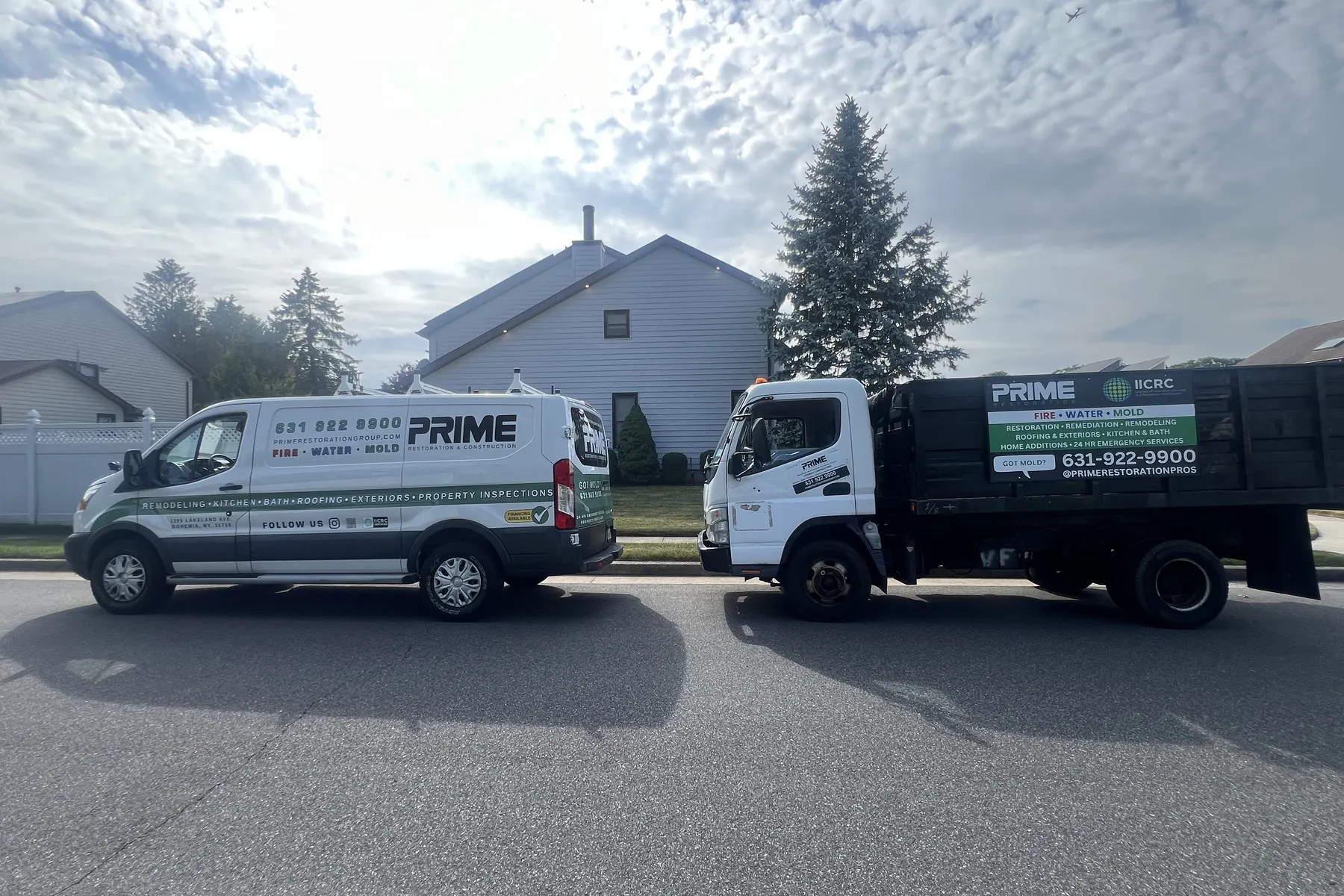
REAL PRIME FLEET PHOTOGRAPHY
GOOGLE CUSTOMER FEEDBACK
Real work.
Real feedback.
These are genuine Prime customer reviews from its broader service area; they are not represented as mold jobs in Long Island City unless a reviewer specifically says so.
WHEN MOLD IS SUSPECTED
Safety first.
A documented plan.
Do not disturb suspect growth or aim air movers at visibly contaminated material.
Discuss your property ↗01
Address the moisture
Identify an active leak and arrange appropriate source repair before remodeling.
02
Get the correct protocol
Use an independent appropriately licensed assessment as required by New York law.
03
Keep remediation controlled
Remediation, verification and reconstruction require distinct decisions.
SCOPE OF WORK
A moisture-first remediation plan.
Regulated assessment and remediation are separate professional functions. The actual protocol controls scope.
Moisture investigation & licensed assessment
Investigate the actual leak or humidity problem; follow the required independent assessor’s written plan.
Containment, removal & careful cleaning
Use protocol-driven isolation, HEPA filtration and material-specific remediation by properly licensed professionals.
Independent verification & rebuilding
Confirm the required assessment or clearance, resolve the moisture source and separately scope repairs.
MOLD REMEDIATION IN LONG ISLAND CITY
A plan shaped by your building.
Mold remediation in Long Island City, Queens requires more than cleaning a visible stain. Across properties such as modern towers, converted industrial spaces and low-rise homes, the source of dampness and concealed material conditions determine the appropriate scope. A situation to investigate is concealed dampness behind finishes in mechanically ventilated apartments. Hunters Point and Court Square have different building access needs. New York's licensing requirements distinguish independent mold assessment from the firm conducting remediation; a project-specific protocol and correct moisture repair matter.
Before selecting removal methods in Long Island City, the affected surface, possible hidden moisture and professional licensing obligations must be understood. For example, an assessment could encounter concealed dampness behind finishes in mechanically ventilated apartments. In buildings with modern towers, converted industrial spaces and low-rise homes, tracing the moisture source may require access across an owner/tenant boundary. Loading docks, service elevators and building schedules can govern equipment movement. A qualified assessor's plan and the regulated remediation firm's containment approach must fit the actual conditions; neither the extent of growth nor a specific clearance method can be inferred from the neighborhood name.
In a large apartment building, suspect mold around a bathroom, riser or wall cavity might involve a unit-specific leak or a shared system. Access to one residence does not prove the source has been eliminated. A licensed assessment and protocol should identify affected materials, whether access across units is required and how occupants will be protected. Containment logistics must fit the building's corridors and elevator rules. Independent post-remediation verification is a separate step where required.
For a Long Island City mold project, the visible stain needs to be translated into a location-specific investigation rather than a generic removal quantity. Hunters Point and Court Square have different building access needs. The condition might involve concealed dampness behind finishes in mechanically ventilated apartments; the written assessment must establish what is actually wet, contaminated or inaccessible. Where loading docks, service elevators and building schedules can govern equipment movement, the protocol should explain how containment avoids disrupting occupied spaces and how approved waste routes will be handled. A project should not proceed solely because a building contains modern towers, converted industrial spaces and low-rise homes: observations, independent licensed assessment and remediation responsibilities control the real scope.
For regulated mold work at a Long Island City property, plan the project in distinct parts: licensed assessment, correction of the moisture source, protocol-driven containment and remediation, independent evaluation when required, and reconstruction. If concealed dampness behind finishes in mechanically ventilated apartments, access may need to reach a concealed cavity or source that is separate from the visible patch. Loading docks, service elevators and building schedules can govern equipment movement. Isolation must protect occupied space while not interfering with necessary exits or building systems. A contractor that skips the source repair or ignores the assessor's plan has not demonstrated durable remediation.
A Long Island City resident noticing mold should first record the dampness and any active leak, not scrape suspect material for photographs. An assessor may need to consider concealed dampness behind finishes in mechanically ventilated apartments, yet the building's actual conditions control the required protocol. When the property includes modern towers, converted industrial spaces and low-rise homes, clarify responsibility for the plumbing or enclosure defect and for allowing access to adjoining units. A homeowner should ask for the independent licensed assessment and documentation of completion, especially before paying for replacement finishes.
For mold in Long Island City, the New York State Department of Labor explains Article 32 licensing and NYC Health and HPD publish guidance about indoor moisture and covered housing. Hunters Point and Court Square have different building access needs. This geographic information may inform building access but cannot establish whether concealed dampness behind finishes in mechanically ventilated apartments describes any specific property. The independent mold assessment determines the applicable work and the responsible remediation firm must follow the protocol; the site's landlord or owner should also address the water defect that caused the dampness.
THE WORKFLOW
Evidence first. Then the right work.
Actual conditions, owner authorizations and applicable licenses determine the sequence.
Trace leaks or persistent humidity and document the affected area
Follow the independent licensed assessment, documented conditions and applicable work standards.
Obtain a scope from an independent appropriately licensed assessor as required
Follow the independent licensed assessment, documented conditions and applicable work standards.
Arrange compliant containment, materials handling and remediation
Follow the independent licensed assessment, documented conditions and applicable work standards.
PROJECT PLANNING & ESTIMATING
Understand the scope before work begins.
Assessment, protocol-driven remediation, underlying water-source repair and reconstruction can involve different firms and separate prices.
Prime can prepare contractor documentation and Xactimate estimates when appropriate. Prime does not determine insurance coverage or act as your public adjuster.
Discuss the project ↗Factors affecting the work
- Amount and location of affected materials
- Access and temporary occupant-protection requirements
- Independent assessment, sampling and clearance obligations
- Containment, HEPA equipment and regulated removal needs
- Correcting the water source and rebuilding affected surfaces
FREQUENTLY ASKED QUESTIONS
Long Island City Mold Remediation questions.
Service-specific answers for owners and managers, without assuming every building has the same conditions.
Is visible mold in Long Island City enough to know the full remediation scope?
No. The visible area is only one observation. An independent licensed mold assessor should investigate the underlying moisture cause, affected materials and any concealed spaces as appropriate. A written plan, not just a photograph or a generic spray treatment, should define regulated work.
What if a property shows signs of concealed dampness behind finishes in mechanically ventilated apartments?
First investigate and correct the moisture source. Document rooms, plumbing, humidity or building-envelope conditions that may be relevant. The assessment must determine affected materials and safe access. Removing growth without resolving the cause can allow dampness to recur.
Do mold assessment and remediation require different contractors in New York?
New York Labor Law Article 32 establishes professional licensing and separation requirements for applicable projects. The same company may not perform both the licensed assessment and remediation on the same project where prohibited. Verify the exact licenses and protocol with the selected firms before authorizing work.
Can tenants in Long Island City report mold concerns to NYC?
Yes. NYC311 and HPD provide routes for residential mold and maintenance complaints. Owners of covered properties have duties under city housing rules, including applicable mold-related requirements. The appropriate response depends on the building and the extent of the condition.
Are air movers used inside mold containment?
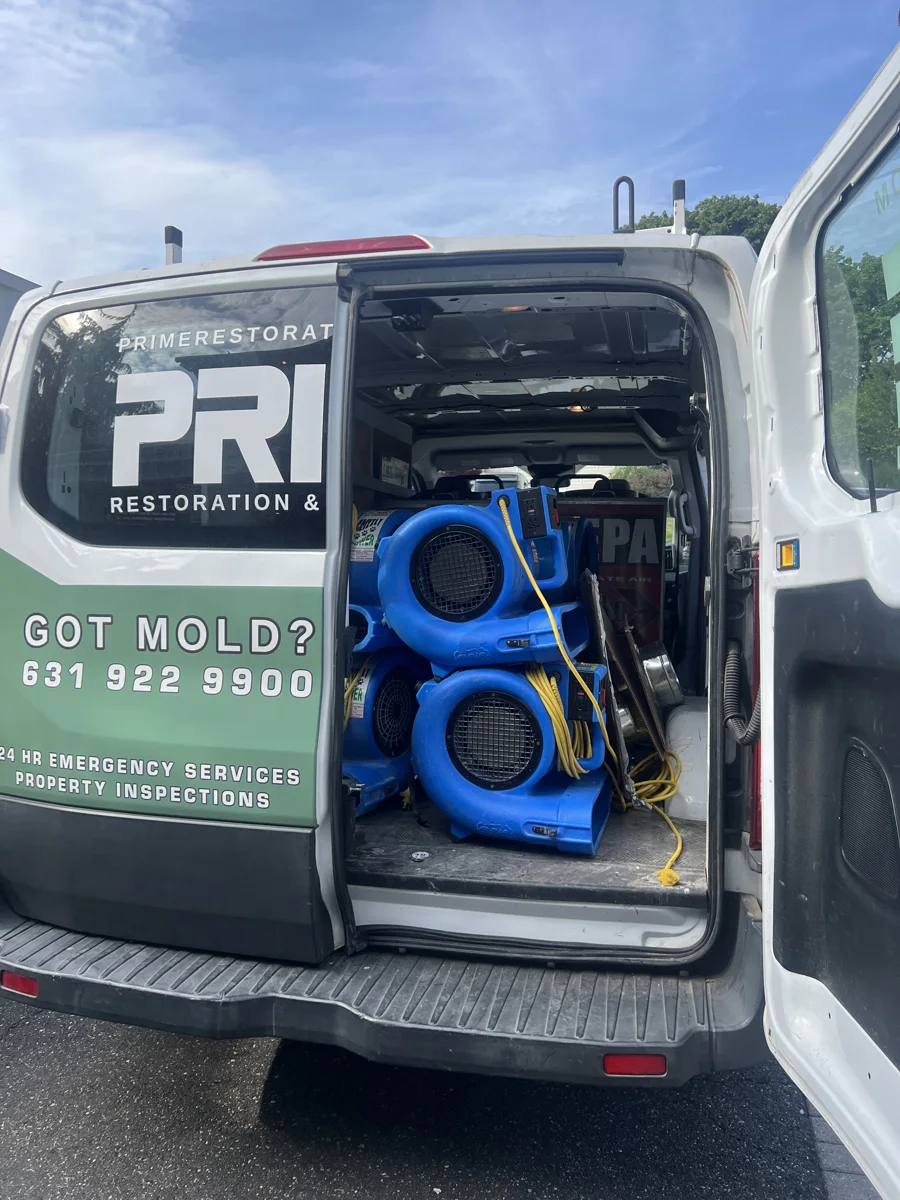
Mold remediation is not ordinary structural drying. Directing a fan at mold-contaminated surfaces could spread particles. A remediation protocol may call for containment, HEPA filtration and controlled removal; wet but uncontaminated areas may have different drying needs. Equipment is selected for the actual hazard.
Will a mold contractor replace wet drywall and cabinets in Long Island City?
The licensed remediation protocol determines which affected materials must be removed or cleaned. Reconstruction of removed finishes should be scoped separately and should wait until the moisture source has been corrected and any required independent verification is complete.
How is a mold remediation project verified after work?
The applicable assessor or protocol identifies final inspection and any required clearance testing. A contractor should not claim independent clearance simply because visible growth has been removed or the smell is better. Request documentation for the completed scope.
What information should I provide for a Long Island City mold inquiry?
Tell Prime which rooms are involved, whether moisture or a leak is active, when growth was noticed, whether the property is occupied and whether a licensed assessment exists. Mention concealed dampness behind finishes in mechanically ventilated apartments if relevant. Prime can discuss coordination and restoration without claiming an unverified local office or professional license.
OUR APPROACH
Restore from a documented plan.
If your Long Island City property has mold growth linked to persistent moisture, start with the actual source, the building access plan and a clear written scope. Hunters Point and Court Square have different building access needs. Prime Restoration Pros is based in Bohemia and can discuss service availability, documentation, and appropriate next steps for Long Island City, Queens.
Queens, New York City · Service area
Long Island City, NY
Serving this community from our Bohemia office. This map shows the service area, not an additional Prime office.
Open town map ↗Nearby mold remediation
OFFICIAL INFORMATION
Reference resources for New York City properties.
These links provide general regulatory, building and safety context. Check your actual property and project requirements before taking action.
DISCUSS YOUR PROPERTY
Tell us what happened in Long Island City.
Prime is based in Bohemia, NY, and serves eligible NYC projects. Describe the damage, location, access and any insurance or licensed assessment already involved.
631-922-9900Bohemia headquarters · Service inquiries for Long Island City, Queens
Request a callback
Tell us about the property and what needs attention.