Visual conditions
Document visible growth, staining, damage, odors, prior repairs and affected rooms.
A serious mold concern deserves more than a guess or a test kit. Understand what a professional assessment should document, when sampling is warranted, and how independent licensed specialists fit into a compliant restoration plan.
BEYOND A SURFACE CHECK
Finding discoloration on a wall is only the beginning. The essential questions are why it developed, what materials may be affected, whether water is still entering the building, and what needs to happen before repairs begin.
A well-scoped assessment brings those observations together. It may involve moisture measurements, the property's water-loss history, targeted sampling when justified, and a report describing findings and recommended next steps. A licensed assessor prepares a formal remediation plan for projects that require one.
Prime Restoration is a family-owned and family-run restoration and construction company based in Bohemia. We help property owners discuss the building conditions and coordinate with independent appropriately licensed assessment specialists as required. We do not treat mold assessment and remediation as interchangeable services.
WHAT THE ASSESSMENT SHOULD ADDRESS
Scope varies by property. These are common assessment components, not a promise that every inspection needs every test.
Document visible growth, staining, damage, odors, prior repairs and affected rooms.
Evaluate suspected water sources, elevated readings and the extent of moisture in accessible materials.
Consider plumbing leaks, exterior infiltration, condensation, ventilation and occupancy-related conditions.
Use air or surface samples only when they address a defined investigative need; report methods and limitations.
Photographs, room-by-room findings, readings and lab results where collected help define the next step.
For covered projects, an independently licensed assessor prepares the plan and handles applicable post-work assessment.
AN IMPORTANT DISTINCTION
The EPA and public-health authorities say routine sampling is often unnecessary when mold is visible. A responsible investigation starts with the building condition—not a promise that an air test alone can declare a room safe.
An individual spore count has no universally accepted health-based pass/fail threshold. Results need interpretation alongside the property, sampling conditions and visible evidence.
OUR APPROACH TO COORDINATION
Tell us where the issue is, when it began, and whether there is visible mold, a leak, an odor or an HPD notice.
Determine the appropriate qualified assessor, applicable licensing, access requirements, and whether sampling is justified.
Use documented conditions, measurements and any lab findings to identify the relevant water source and required work.
Where required, the independently licensed assessor sets the remediation plan; the separate remediation team follows it.
Applicable post-remediation verification and repairs are coordinated before reconstruction closes out the affected area.
KNOW THE RULES
New York State Department of Labor licenses mold assessment and remediation specialists under Labor Law Article 32. Covered mold projects involve distinct responsibilities, and the same licensee cannot perform both assessment and remediation on the same project.
Additional NYC DEP rules and filings may apply to qualifying larger residential or non-residential properties. A company's general restoration experience or IICRC firm certification does not replace a state mold assessor license.
For assessment, remediation and post-work verification, verify the actual professional's license and required independence. Prime's involvement depends on the scope and qualified contractors for that project.
Official NYS Mold Program NYC DEP Mold Abatement requirements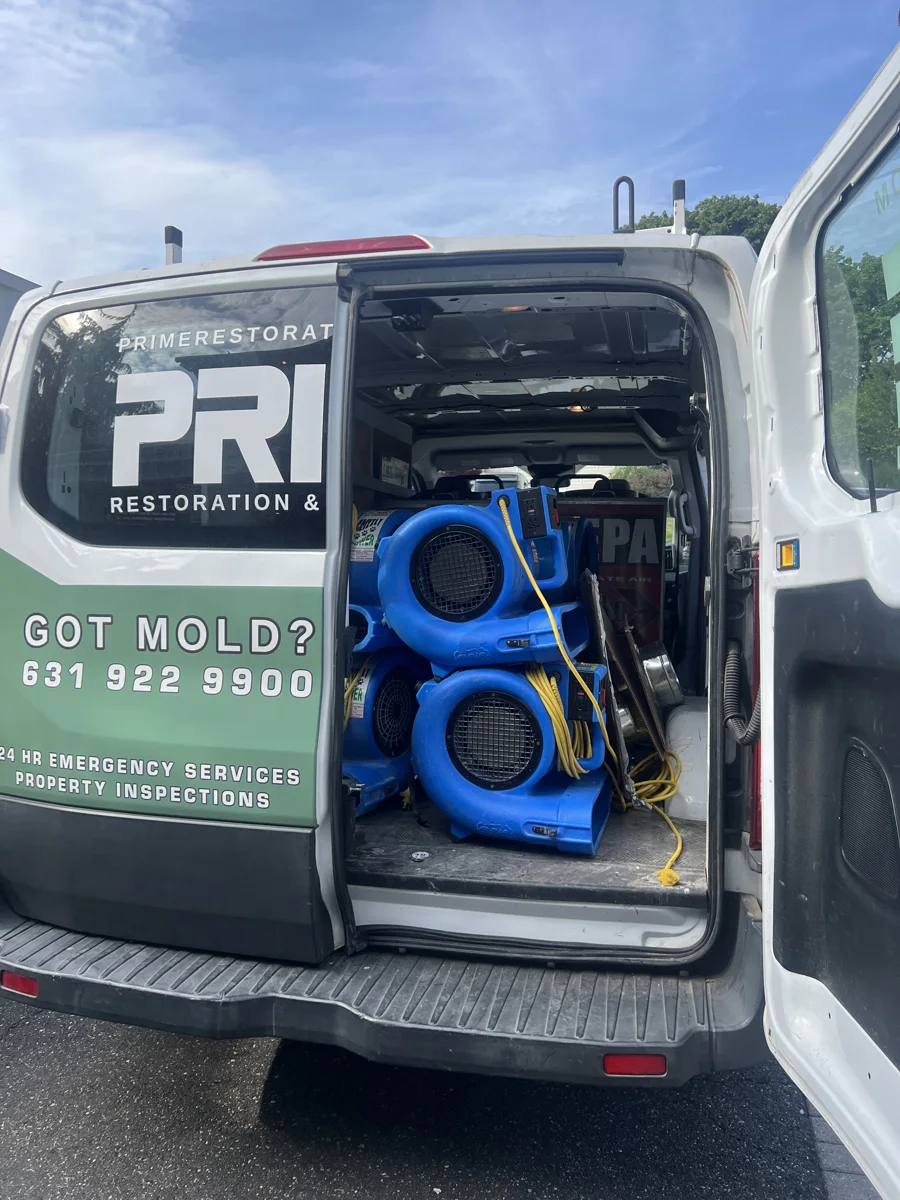 ACTUAL PRIME FLEET / NEW YORK
FAMILY OWNED. FAMILY RUN.
Whether you're dealing with a leak in an apartment, recurrent moisture in a multifamily building, or damage that has already led to an insurance claim, the goal is the same: understand the conditions before choosing the scope of work.
We work with owners, residents, property managers and restoration stakeholders across eligible NYC service locations. Our headquarters is in Bohemia, NY—not a separate office in each borough.
FREQUENT QUESTIONS
A useful assessment helps you understand the building—not just a laboratory result.
No. Assessment identifies and documents conditions and, when required, provides a remediation plan. Remediation is the separate corrective work. New York law restricts the same licensee from performing both roles on the same covered project.
Not necessarily. EPA and public health guidance explain that routine air testing usually is not needed to decide whether visible mold and moisture should be addressed. Sampling can be useful for specific, justified questions.
The scope depends on the property. A useful report may document inspection findings, affected locations, moisture readings, photographs, sampling methods and laboratory results where used, and recommendations. A formal remediation plan, when required, must come from a qualified licensed assessor.
Moisture readings can identify potentially damp areas and help determine the extent of an investigation. Interpretation depends on the material, equipment, and building conditions; a reading alone is not proof of mold.
New York State law imposes separate roles for licensed mold assessment and remediation work on the same project. Confirm the applicable rules and licenses with the professionals before proceeding.
It depends on the violation class, building type and extent of the condition. Certain NYC projects require licensed assessment, licensed remediation and DEP documentation. Review the notice and requirements before ordering work.
A mold assessment helps document building conditions and recommend corrective work. Mold sampling has no universal health-based pass/fail threshold, and an assessment is not a medical diagnosis or a guarantee of health safety.
Coverage depends on the cause of loss and your policy. We can help you organize contractor-related records, but your insurer determines coverage and benefits.
RESEARCH & OFFICIAL GUIDANCE
These resources explain why a moisture-focused assessment, proportionate testing, and separate licensed responsibilities are important.
General property information only. Sampling decisions, scope, licensing and filing requirements depend on the actual building, work area and applicable law. Nothing on this page guarantees insurance coverage, clearance, or a particular regulatory outcome.
GET THE RIGHT NEXT STEP
Tell us what you're seeing, where moisture may be coming from, and whether there is an existing assessment report or HPD notice. We can discuss the scope and the appropriate qualified assessment arrangement.
631-922-9900Planning a renovation or dealing with damage? Start with a conversation and a clear next step.
631-922-99001395-2 Lakeland Ave
Bohemia, NY 11716